
6 Ways to Make Money on Instagram?
You’ve probably already heard stories about how Instagrammers are making money from the photos they take and share every day. You may have even looked at your own sizable following and thought: “Maybe I could do this full-time too.”

Like bloggers, YouTubers, and anyone who has built an audience around the content they create, influencers have figured out reach and influence – two things that many businesses struggle with.
-
 500 Instagram Followers3,99$
 -
 2500 Instagram Followers9,99$
 -
 10 000 Instagram Followers39,99$
 -
 5000 Instagram Followers18,99$
Together, reach and influence offer creators on Instagram the opportunity to explore multiple sources of potential income, whether they want to build an empire or just earn some extra money and free things.
How Many Instagram Followers Do You Need to Make Money?
If you’re wondering right now how many followers you need to start generating real income, the short answer is: “Not as many as you think.”
The long answer depends on factors that range from:
What niche you’re in and how easily you can directly connect it to a product category (according to the most popular hashtags on Instagram, popular niches include fashion, food, beauty, and fitness).
How engaged your followers are.
Which revenue channels you’re exploring
Of course, the more engaged followers you have, the better. Check out our tips on how to get more Instagram followers.
While top influencers earn thousands of dollars per post, even those with a small but engaged following of 1,000 have the potential to start making money.
How to Make Money on Instagram
Depending on your unique brand of Instagram content, your target audience, and your level of commitment, you can use Instagram to make money in the following ways:
Partner with brands on sponsored posts
Become an affiliate
Open your own online store
Create an Instagram shop
Sell your photos online or on merchandise
Monetize your content
The great thing about it is that pursuing one revenue stream doesn’t necessarily exclude another.
So let’s start with the most common approach to monetizing Instagram: partnering with brands as an influencer.
Partnering with Brands on Sponsored Content
The term “Instagram influencer” gets thrown around a lot these days.
An influencer is essentially anyone who has built an online reputation by doing and sharing amazing things online. For their audience, influencers are tastemakers, trendsetters, and trusted experts whose opinions on certain topics are respected.
Many brands simply can’t compete with that, so they partner with influencers on sponsored content such as posts and Stories that help spread the word about their products.
However, brands don’t just want your Instagram account’s follower count and reach – they also want your audience’s trust and engagement with quality content.
It can be hard to find the balance between income as an influencer and integrity as a creator, but if you don’t rely on your Instagram marketing income to stay afloat, you always have the option to choose which brands you work with, just as brands will choose which Instagrammers they partner with.
How to Decide How Much to Charge as an Influencer
Typically, these influencer deals involve creating content – an Instagram ad, post, video, or story – and sometimes include permission for the brand to use that content on their own site or in advertising.
Most of these deals are subject to negotiation and can involve a single post or an entire campaign in exchange for a fee, a free product, a service, a gift, a promise of exposure, or some combination of these options.
When negotiating, keep in mind that you’re not just offering content, but also access to your audience – potentially a large reach on one of the most popular social media platforms – as well as usage rights.
The average influencer with up to 100,000 followers charges an average of up to $500 per post. Just to give you an idea of how much some brands are willing to pay and how to negotiate based on the cards you have in hand.
You can simply buy followers here >>
(This is a great start)
Last but not least, it is important that as an influencer you also know your own audience.
What is the composition of your audience and what is your engagement rate (total engagement divided by your number of followers)? You can dig out the numbers to confirm this in the Instagram Analytics overview if you have switched to a business account. This will help you be prepared when the time comes to negotiate.
How to find brands to collaborate with
If you are big enough, brands will likely find you. But you can also look for brands to collaborate with that are on a similar personality and values level, so your audience won’t feel like you are “selling out”.
You can reach out to them directly and try to strike a deal, but you can also sign up on one of the many influencer marketplaces to increase your chances of being discovered, such as:
Fohr. Connect your Instagram, blog, YouTube channel, and other social platforms to create an influencer “card” that showcases your various profiles and total reach for brands looking for partnerships. You also have access to a list of brands and their wish lists, so you can take the initiative and reach out to them as well.
Grapevine Village. If you have 5,000 or more followers, you can list yourself on the Grapevine Village marketplace to gain the opportunity to collaborate with like-minded brands.
Crowdtap. Complete small content creation tasks and earn rewards. This is great if you have a smaller audience. Available in the USA only.
IndaHash: Through indaHash, you can get involved in various projects. Brands post campaigns you can participate in. Post a photo on Instagram with designated hashtags and get paid. You need at least 700 engaged followers to be eligible.
Rules vary for sponsored content, but to stay on the safe side and respect your audience’s trust, consider adding the hashtag #sponsored to identify sponsored posts.
For examples of sponsored posts and how Instagrammers incorporate brands into their stories or captions, search #sponsored on Instagram, like this one from the How He Asked account, which shares proposal stories and partners with a jewelry company:
Instagram also has a “Paid partnership with” tag that visibly identifies sponsored posts, which some brands may require you to use to disclose your relationship with them.
Become an affiliate partner
Unlike an influencer, an affiliate partner is more involved in driving sales for the partner brand, rather than simply creating awareness — in exchange for a commission.
This is usually done through a trackable link or unique promo code to ensure that clicks actually convert into sales. Use a combination of clickable links in your Instagram bio and in Instagram Stories using the Swipe Up feature or through stickers. Since you can’t embed links in Instagram posts, you can create promo codes to earn money from different angles.
Consider reaching out to one of the many online retailers that offer affiliate programs. Or you can explore popular marketplaces such as:
ClickBank. An affiliate platform with tiered commissions that is open to everyone.
RewardStyle. A fashion and lifestyle influencer network offering 20% commissions by invitation only.
Amazon Associates. A popular option that pays a 10% commission.
Although it sounds like a numbers game, affiliate marketing is also an art, and you will have a better chance of success if you approach it with a plan and expand your online presence with a website and other marketing channels.
Tip: I recommend using a URL shortener like Bitly, especially if the links are located in your Instagram bio.
Open your own online store
By now, it might seem like the only way an Instagrammer can make money is to sell out and collaborate with other brands.
But creators of all kinds have a great opportunity to “sell themselves” with their own products: physical goods, services, or digital items that can be an extension of their brand, and thus build a business centered around an audience.
Some upfront time investment is required, but in today’s world it is almost natural for creators to make the leap to entrepreneurship. This is becoming easier with a growing list of Instagram tools available for building an audience.
Just look at Loki the wolf dog, one of Instagram’s biggest entrepreneurs of his
By selling your own merchandise, you don’t have to worry about incorporating messages from other brands into your posting strategy. What’s more, you can put your own brand on the products you sell.
Fans can show you their love and support your work by buying from you — a purchase they can feel good about.
There are several ways to sell your own merchandise:
You can use a print-on-demand service to print and ship custom t-shirts, pillows, coffee mugs, wall art, and more.
You can sell services such as photography or consulting, and use your bio to direct interested parties to a contact email or a link to your professional website.
You can sell digital products such as courses, e-books, or design templates.
You can use your Instagram account to launch a business selling your own original products or even a book.
If you plan to sell several items in your own Shopify store, you can also enable Instagram shopping on your website using one of the available Instagram gallery apps.
Setting Up Instagram Shopping
The past few years have been a big boost for e-commerce brands and creators who want to sell on social media. Instagram has rolled out a lot of features under the Instagram Shopping umbrella, making it easy for people to shop your business’s videos and images on the platform.
It all starts with an Instagram shop, or your storefront. There, you can share your story and sell products. Instagram provides shoppers with an elegant environment to browse and purchase from your collections. All you need to set up Instagram Shopping is a Business or Creator account.
You can customize your shop by creating collections, or curated products presented around themes. Common themes include new arrivals, gifts, or seasonal trends.
Just like in an online store, you can create product description pages in your shop. Here you can include all the important product information such as prices and descriptions. You can send people to your website to complete a purchase, or let them buy through the app using Instagram Checkout.
But it doesn’t stop there. People can also shop your products on Instagram through features such as:
Shoppable posts and Stories. Using product tags, you can showcase items from your catalog in videos and images. People simply tap to learn more about an item.
Shoppable ads. You can also add product tags to ads to extend the reach of your shoppable posts. Setup is simple in Ads Manager, or you can boost existing Instagram posts in your feed.
The Instagram Shop tab. Instagram’s shopping tab is the destination for people looking to discover new brands relevant to them. This makes it easier to reach new customers within the app.
Live shopping. Do you enjoy live content? Then Instagram Live Shopping will help you make money on Instagram. Simply go live and tag products from your catalog (or Facebook shop) that you want to feature in the broadcast. The product will appear at the bottom of the screen, where people can tap to purchase it immediately.
And the best part? Setting up an Instagram shop is free. You only pay a commission if someone makes a purchase through Instagram Checkout.
Selling Photos Online
Some people may become famous on Twitter by telling jokes in 140 characters, but Instagram is at its core a photo-sharing app. And photos are assets that can be licensed, printed, and sold in various ways.
If photography is what brought you to the Instagram game in the first place, you can list your photos on marketplaces like 500px or Twenty20, where brands and publishers can license them.
However, you can also sell your photos as prints and on other physical products in a similar way to what was described in the previous section. Services like Printful and Teelaunch will allow you to place your photos on posters, phone cases, pillows, and more, taking care of order fulfillment and customer service, so the only thing you really need to worry about is making the sale.
Take the story of Daniel Arnold, who according to an interview in Forbes magazine went from “eating toast three times a day” to earning $15,000 in 24 hours by offering prints of his popular but controversial photos for sale. If you already have demand, all it takes is to take the initiative and offer your audience the opportunity to buy your photos from you.
Monetize Your Content
IGTV ads
IGTV ads are one way to monetize social media content.
In March 2021, Instagram opened up IGTV ads to creators in the US, UK, and Australia. These ads appear when people navigate to watch IGTV from a creator’s channel. The video is mobile-friendly and lasts a maximum of 15 seconds.
In an interview with The Verge, Instagram’s COO Justin Osofsky stated that creators receive a 55% share of all IGTV advertising revenue, which is the same rate as on YouTube. This makes Instagram an attractive way for creators to earn passive income from their content and make a living.
According to makeup influencer Avani: “IGTV has given me a space where I can show my fans more of my creativity and personality, which has helped me develop my personal brand. Being able to earn money from content I’m already creating gives me even more motivation to share more of myself with my followers on IGTV.”
Live badges
Live badges are a newer feature that helps creators and influencers earn money on Instagram. A popular concept borrowed from Twitch and TikTok, Instagram Live badges function as tips you can receive during a live broadcast.
With this feature, viewers can purchase a badge during a live broadcast that appears in the comments and unlocks features, including a spot on the creator’s badge list and access to a special heart.
People can purchase:
One heart for $0.99
Two hearts for $1.99
Three hearts for $4.99
Getting Paid on Instagram and Beyond
What started as a hobby — making people laugh, taking silly photos with your dog, or sharing pictures of food — can turn into an opportunity to make your Instagram page a source of income driven by your engaged followers. But why stop there?
Creators have plenty of ways to make money online. If you want to open up additional income streams on the internet, be sure to read our tips on how to make money on YouTube. Your Instagram followers will surely follow you to other channels too. You just need to open the doors for them to walk through.
Making Money on Instagram FAQ
Do Instagram users get paid?
Yes, you can get paid on Instagram in the following ways:
- Creating sponsored posts for brands that want to reach your audience
- Becoming an affiliate and earning a commission from selling other brands’ products
- Creating and selling a physical or digital product or offering a paid service
- Creating and selling a physical or digital product or offering a paid service.
- Selling licenses for your photos or videos
- Monetizing content
How many followers do you need to make money on Instagram?
The more followers you have on Instagram, the more money you can make. Rates also depend on engagement, content quality, name recognition, audience demographics, and skills. The standard is $10 per 1,000 followers, but it can vary depending on your contract and sponsor.
How much money does 10,000 Instagram followers bring in?
Micro-influencers, meaning accounts with 10,000 or fewer followers, can earn approximately $88 per Instagram post.
If you want results right away, you can get EU/USA followers on Instagram right now.
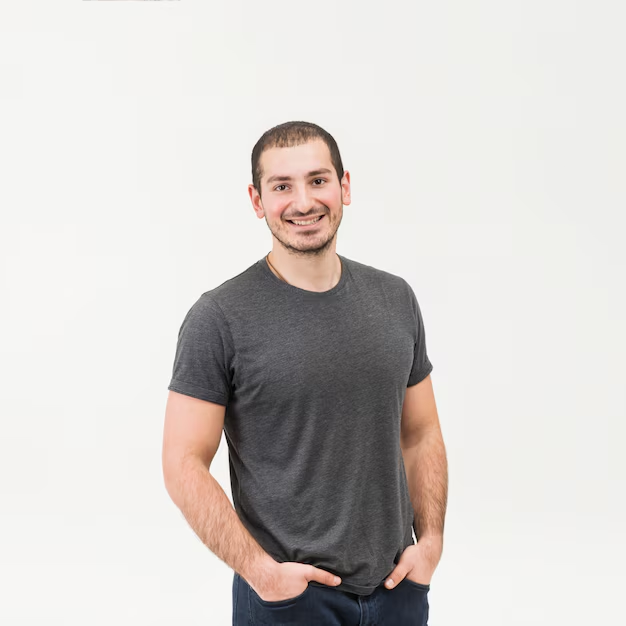




Michal Záruba is a digital marketing specialist and a consultant in social media and SEO. For more than 8 years, Michal has been helping brands grow online through strategic content, search engine optimisation and effective communication on platforms such as LinkedIn, Instagram and YouTube.
On the blog, Michal shares practical tips on how to combine SEO, social media and brand building into one working strategy, focusing on how companies can use modern tools and algorithms so that their brand gains not only reach but also trust.
Alongside creating content, Michal lectures on digital marketing, trains teams and follows new trends in AI and search.